There’s been an explosion of AI prototypes thanks to the rise of vibe coding tools, but the gap between prototype and production, between what AI can help you start but can’t help finish has become the limiter for founders and product builders.
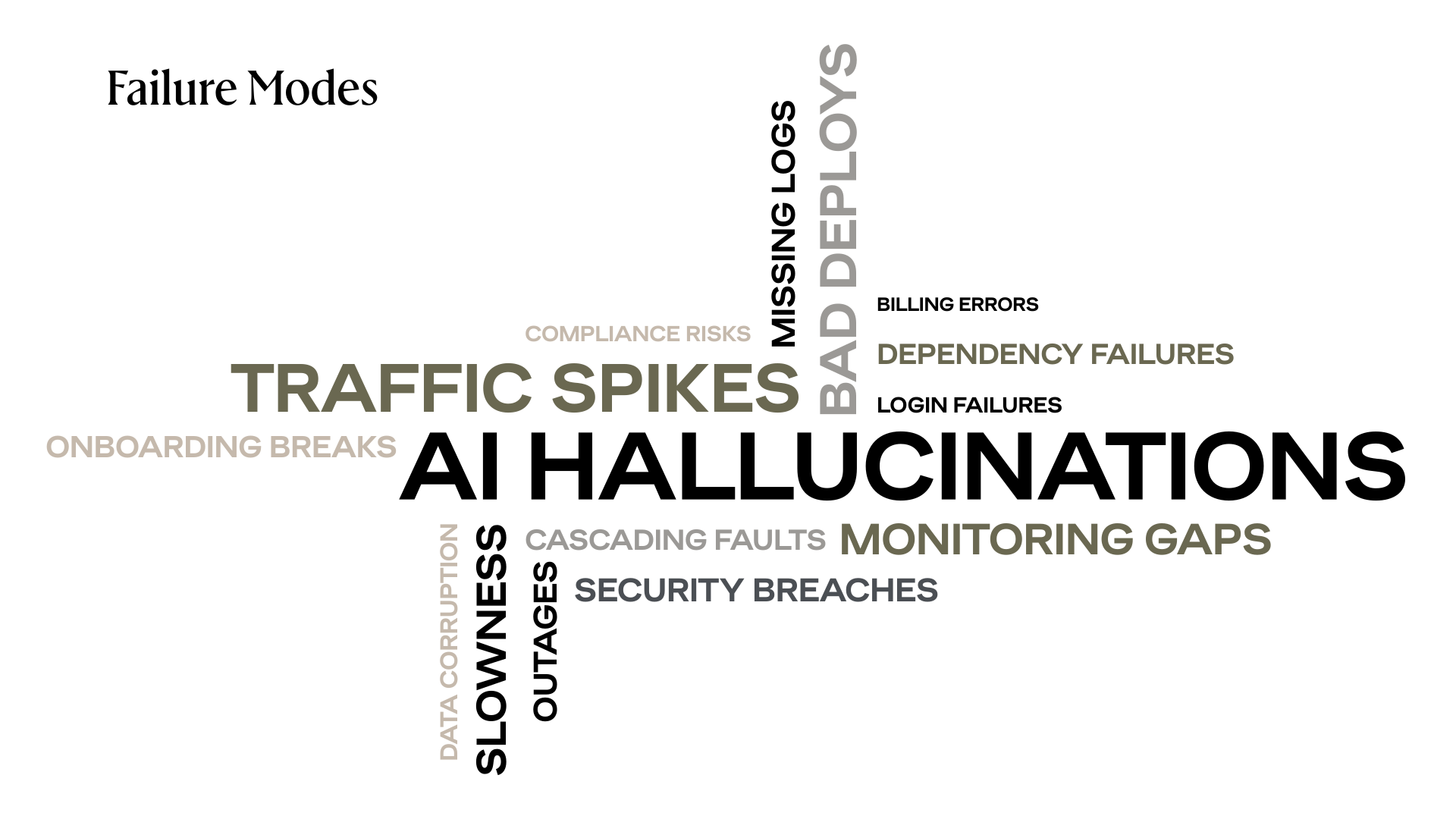
Common issues and failure modes when scaling AI prototypes to production.
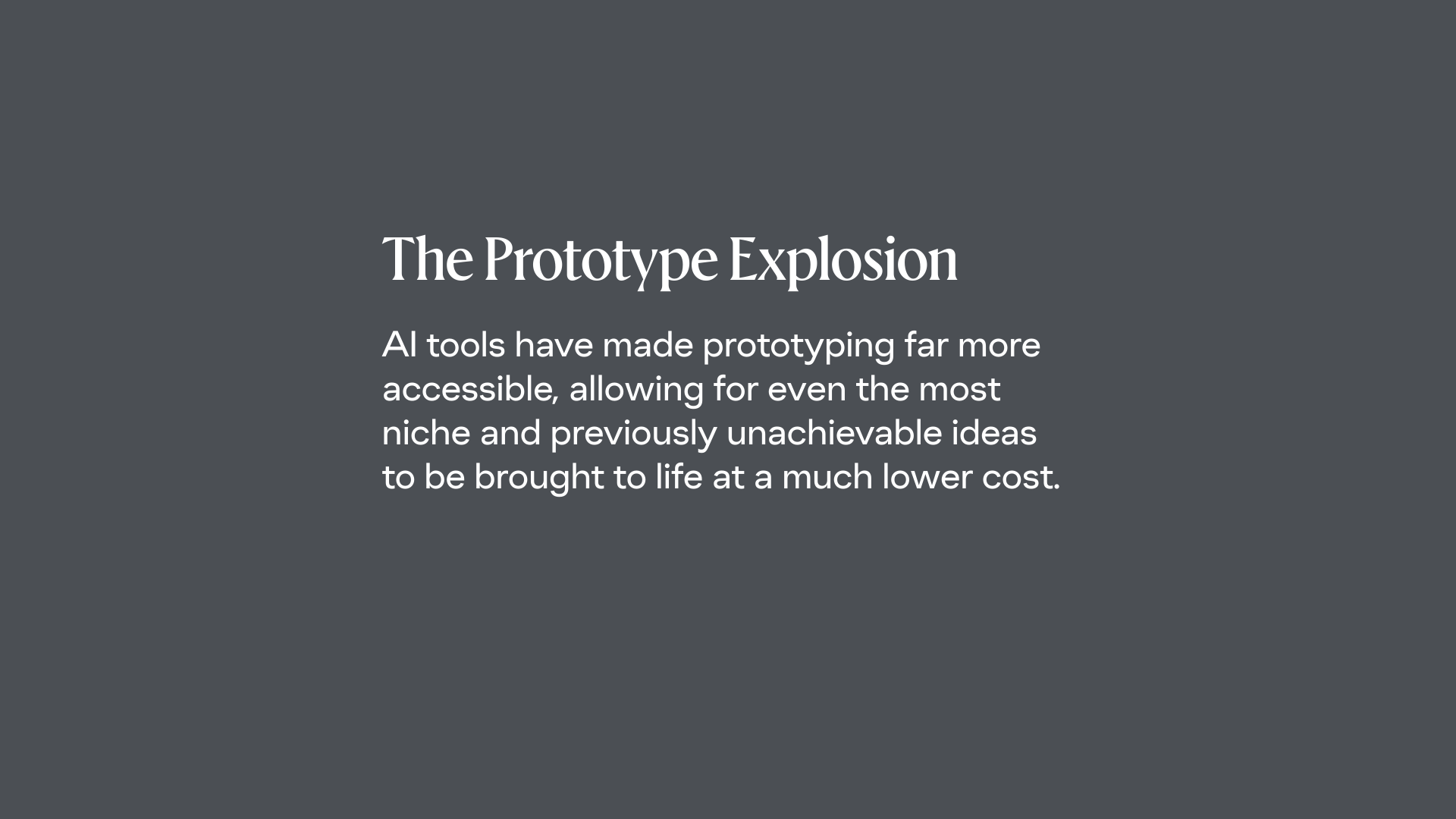
Massive growth in prototyping, but very few product launches to match.
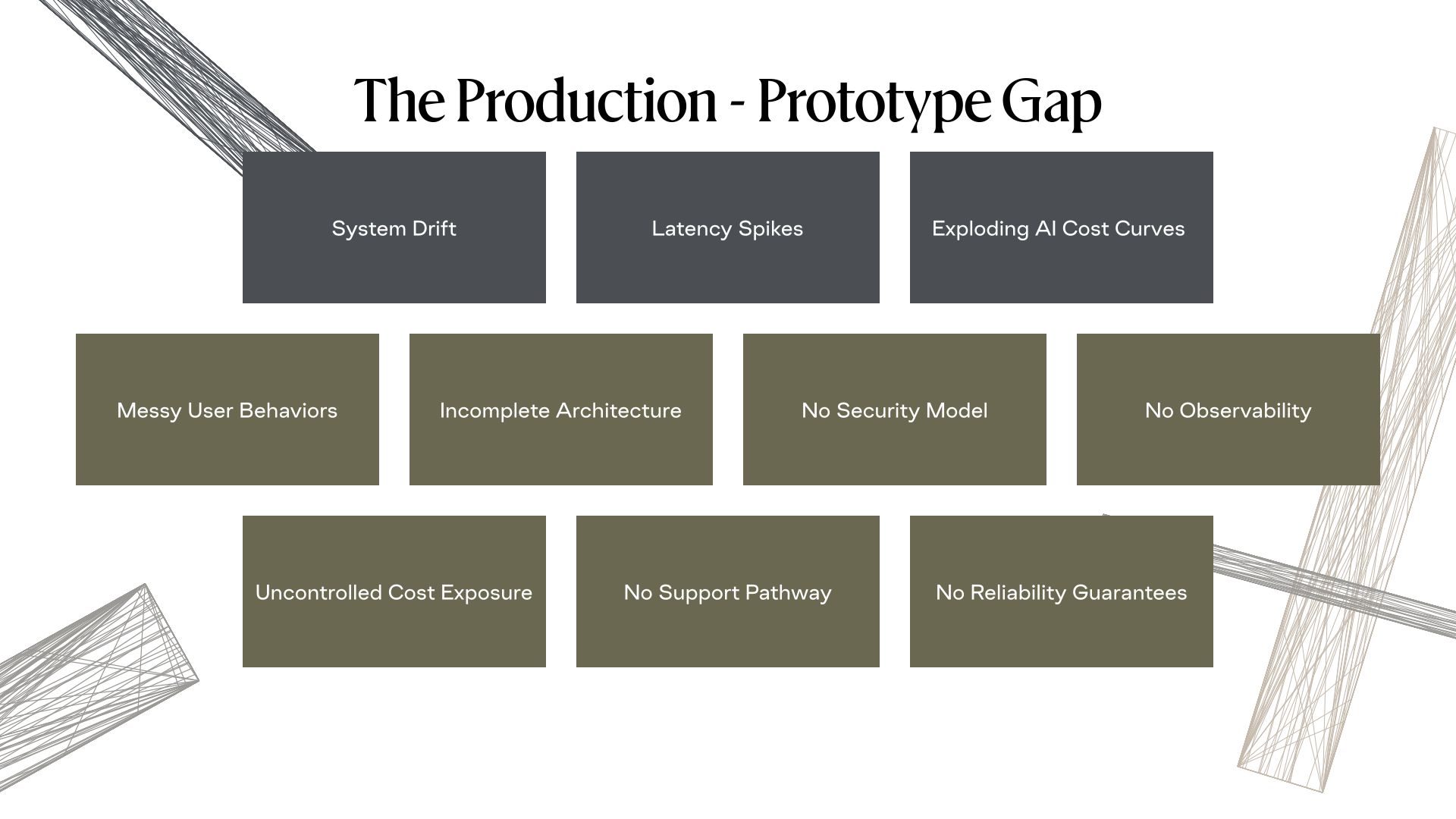
Top 10 reasons why projects fail to reach production (including issues to contend with for an AI-native product).
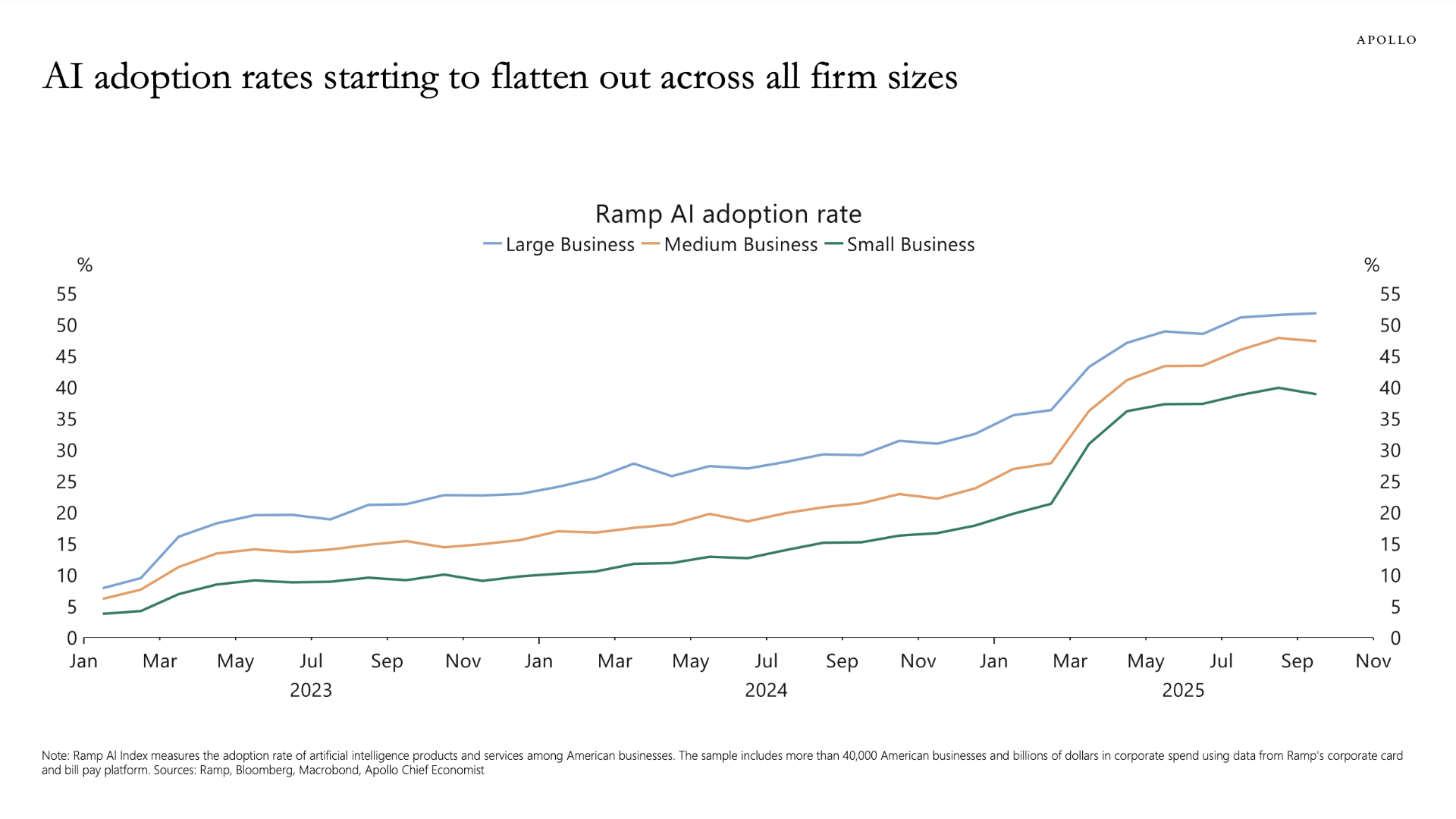
The market is now more skeptical of AI, and AI spending is plateauing as the hype dies down.
As of late 2025, these are the 4 AI realities we see: AI prototpying continues to grow at a high rate but there have hardly been any production grade products made from these prototypes. At the same time, spending on AI tools and products is starting to plateau. Lastly, its clear that the LLMs have limitations by design which aren't getting solved by bigger models and require new techniques which don't exist yet.
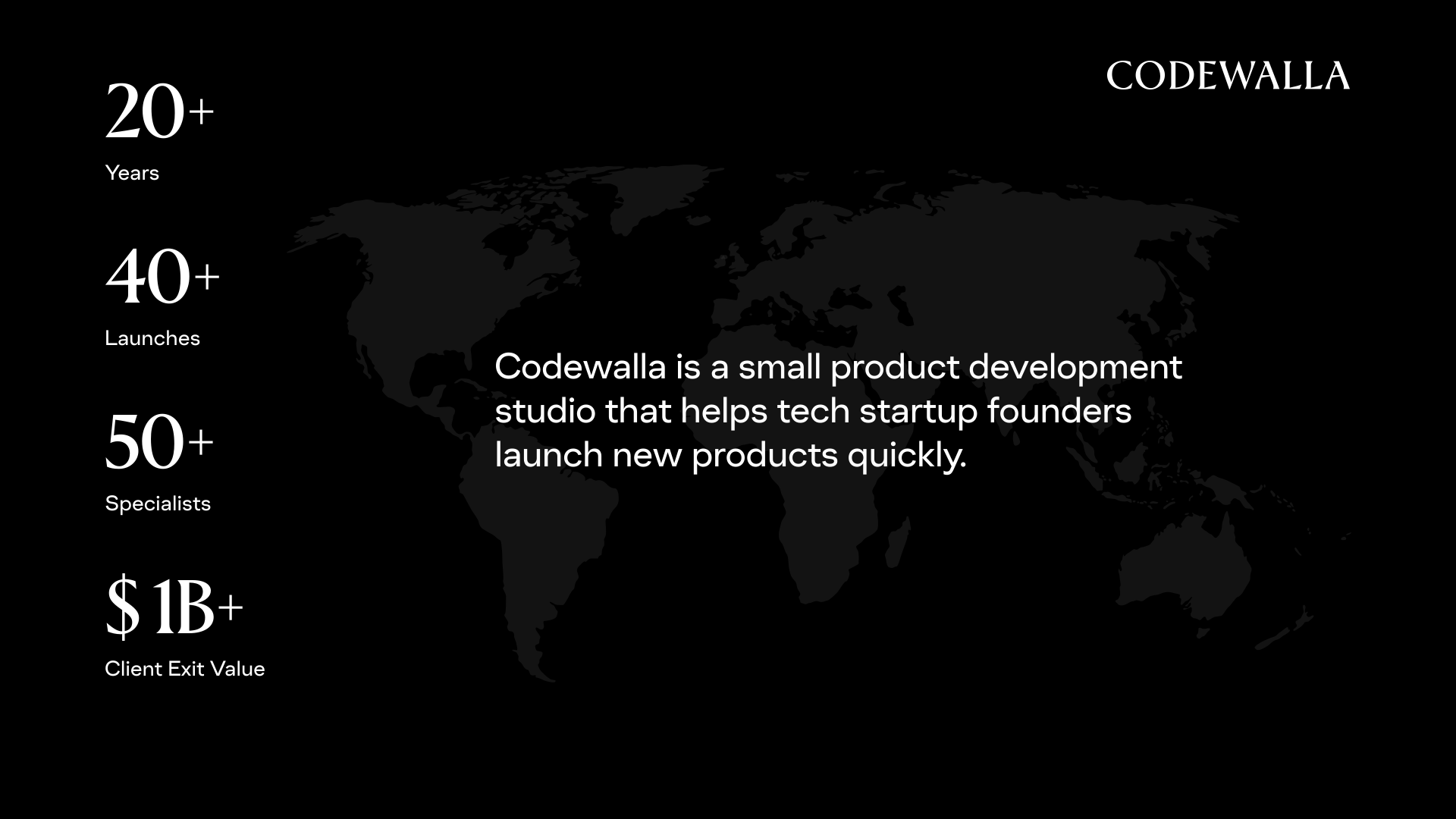
Codewalla has worked with NYC startups since the early 2000s, both as an investor and a technology partner, across multiple technology cycles; web, mobile, cloud, SaaS, and now AI. What we’ve seen consistently is that the strongest founders and product teams lean into each new era early, reinventing products, processes, and teams, all the while not losing sight of core fundamentals.
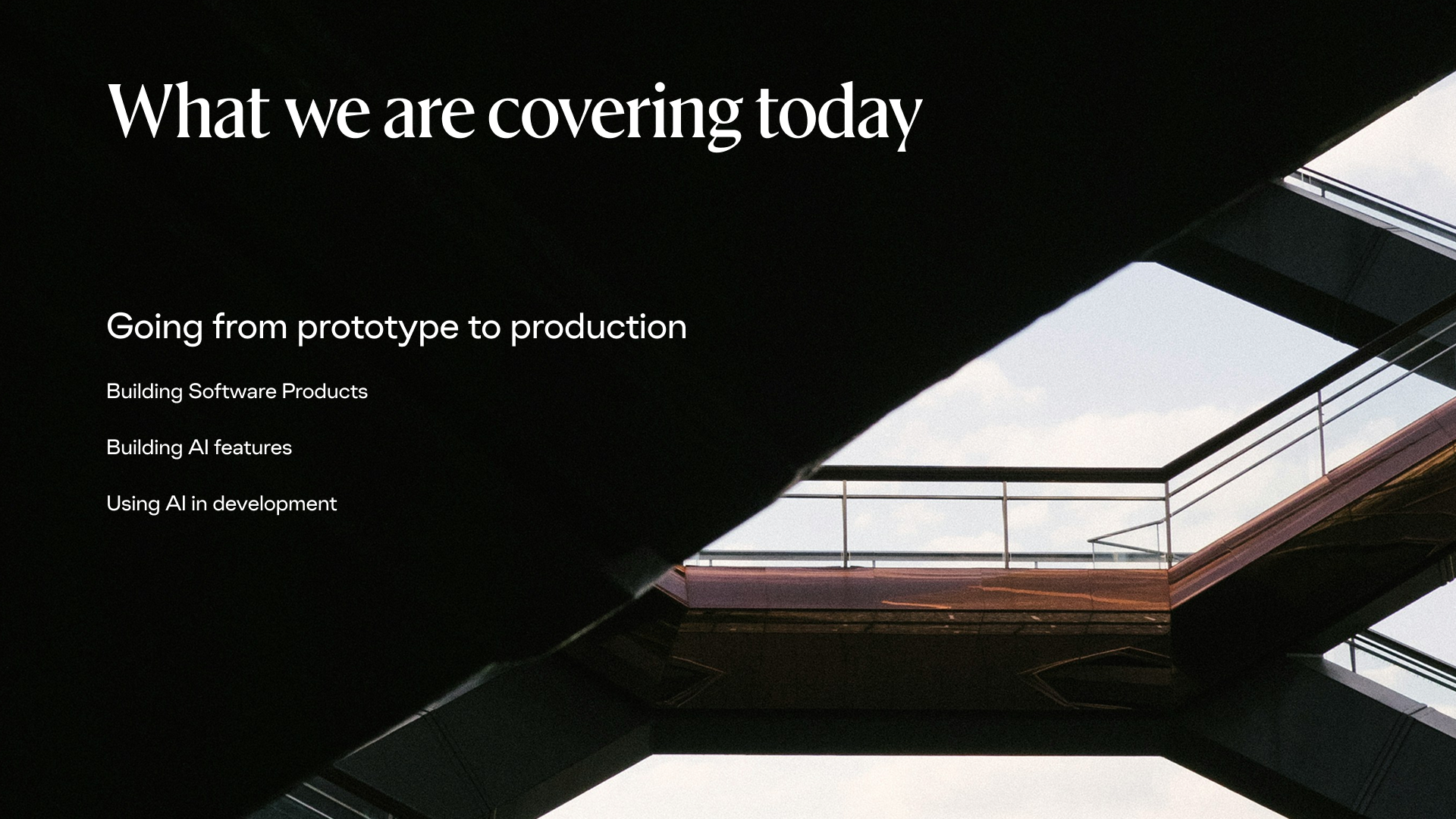
What we are covering today are the 3 main aspects of bridging the gap between Prototype and Production. Firstly, fundamentals that apply to any software product development. Secondly, considerations unique to developing AI Native features or products. And thirdly, how to use AI in the development process itself for both AI and non-AI features.
Case Study
AI-Assist Game Builder
We are going to cover this using an example of a product we developed at Codewalla, taking it from prototype to production.
The objective of the AI-Assist game builder was to automate the creation of training games from raw source material using AI.
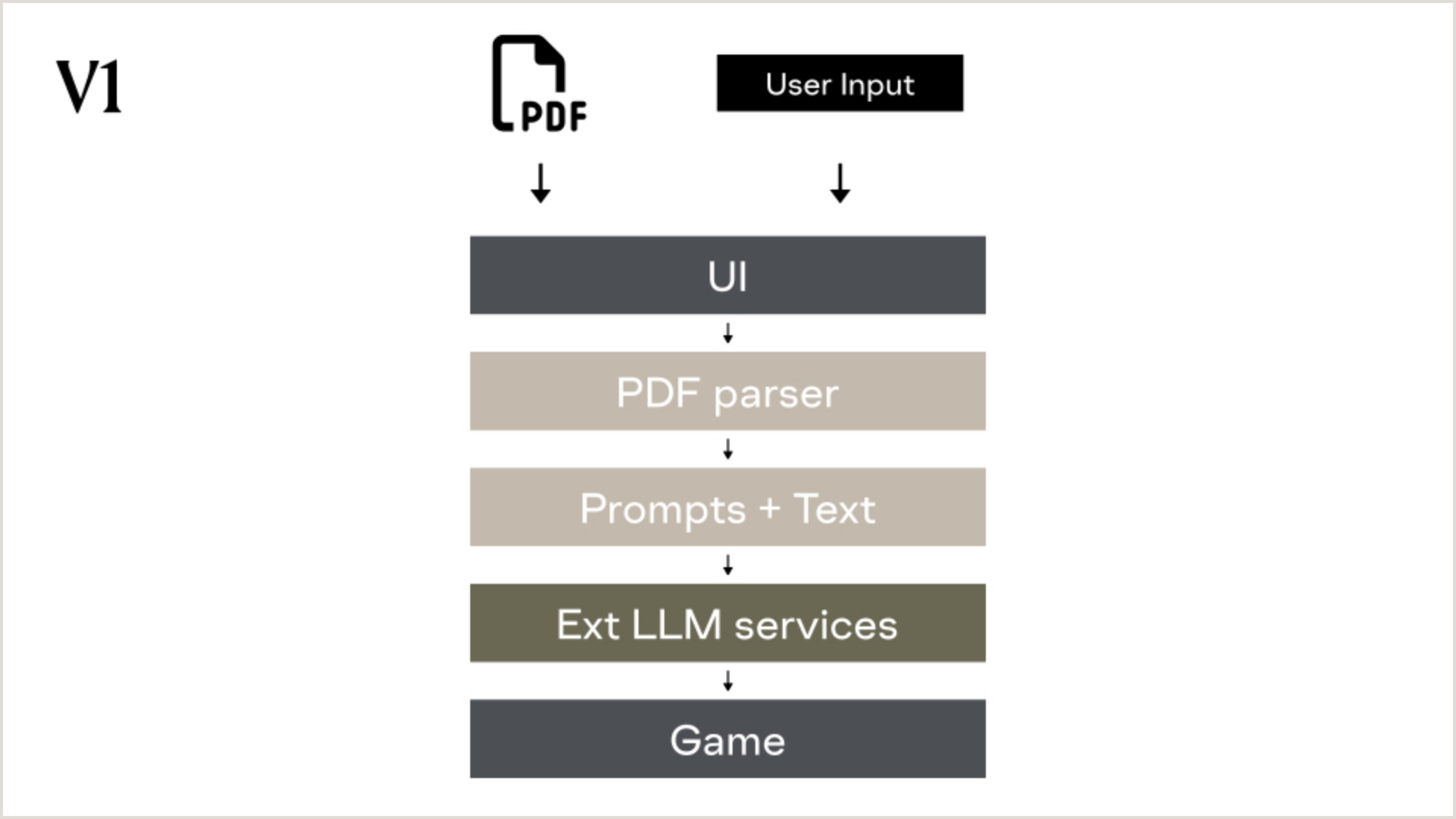
The basic, early architecture of the prototype.
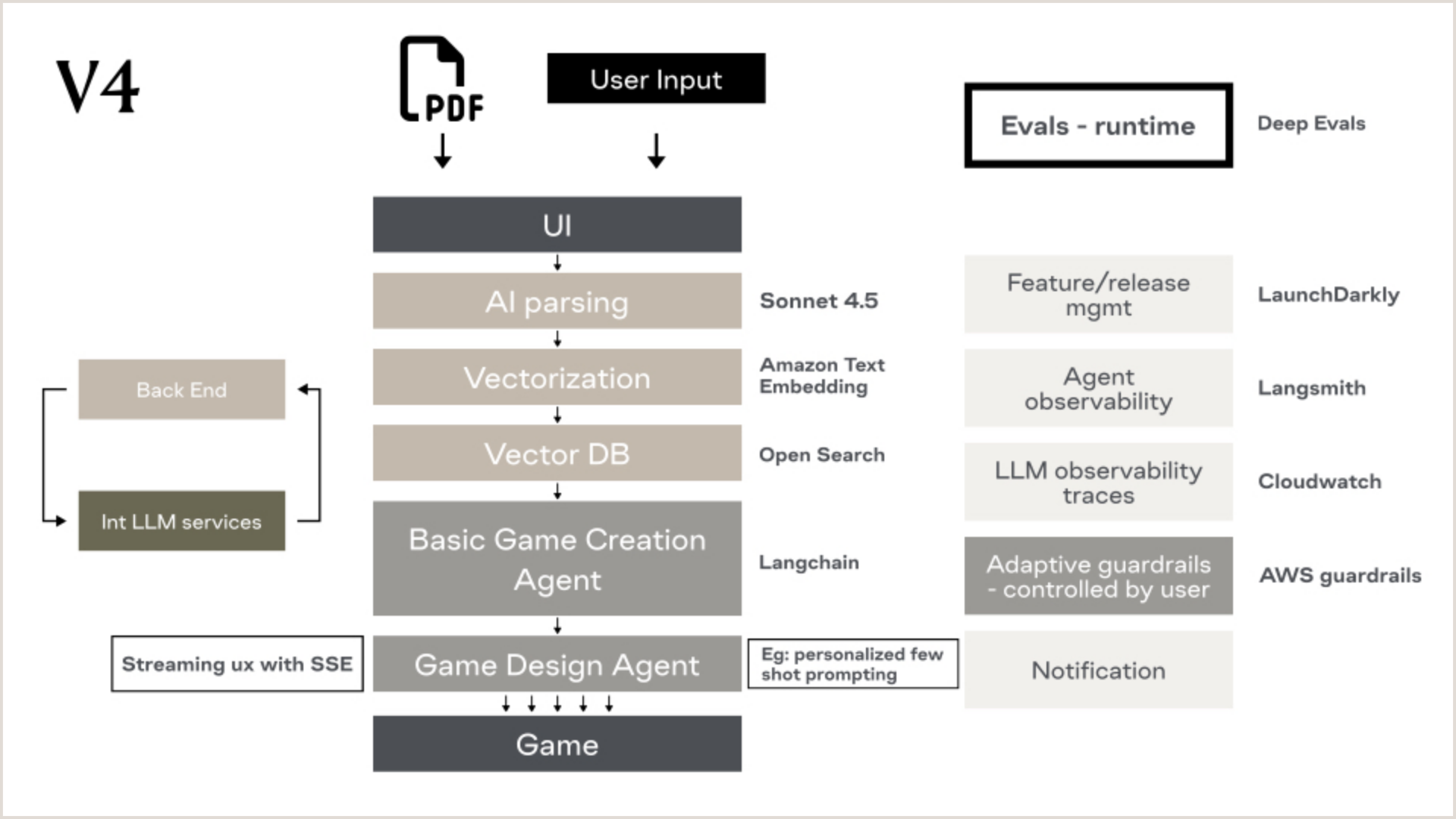
The significantly more complex, production-grade architecture of the enterprise-ready product.
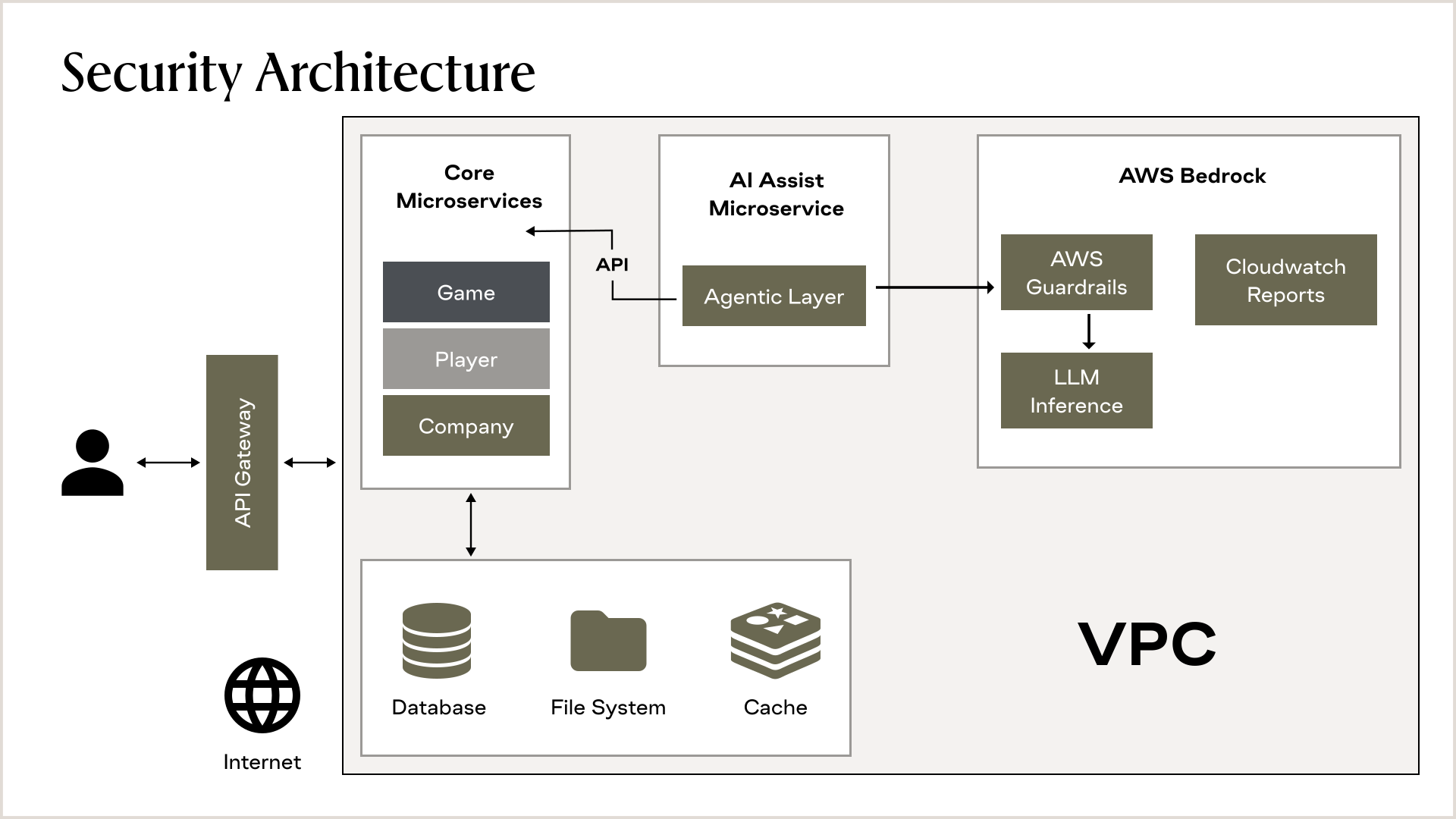
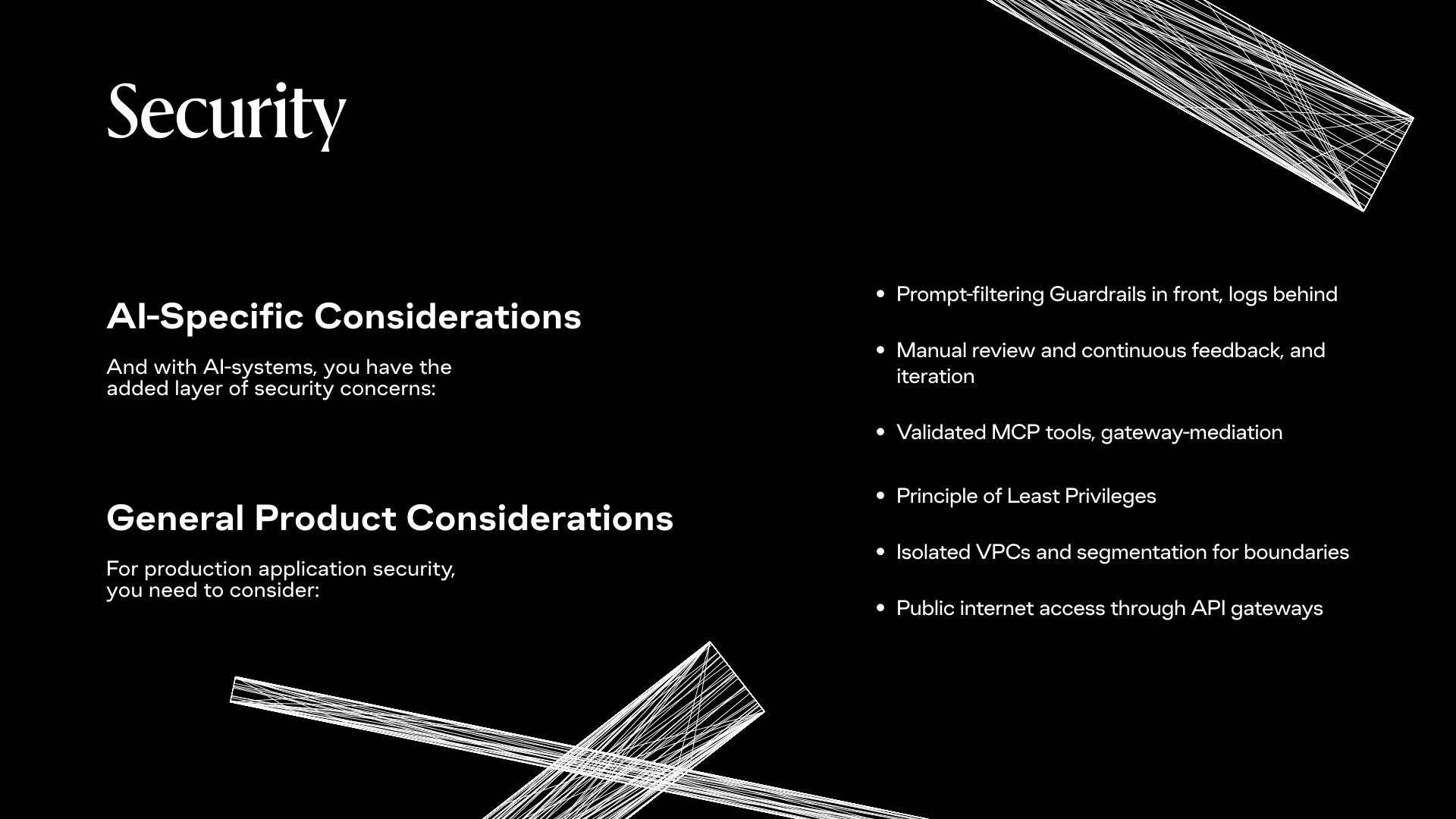
What is depicted here is the basic security infrastructure: A separation of core services from the AI services, and separating all of them from the public internet using a VPC.
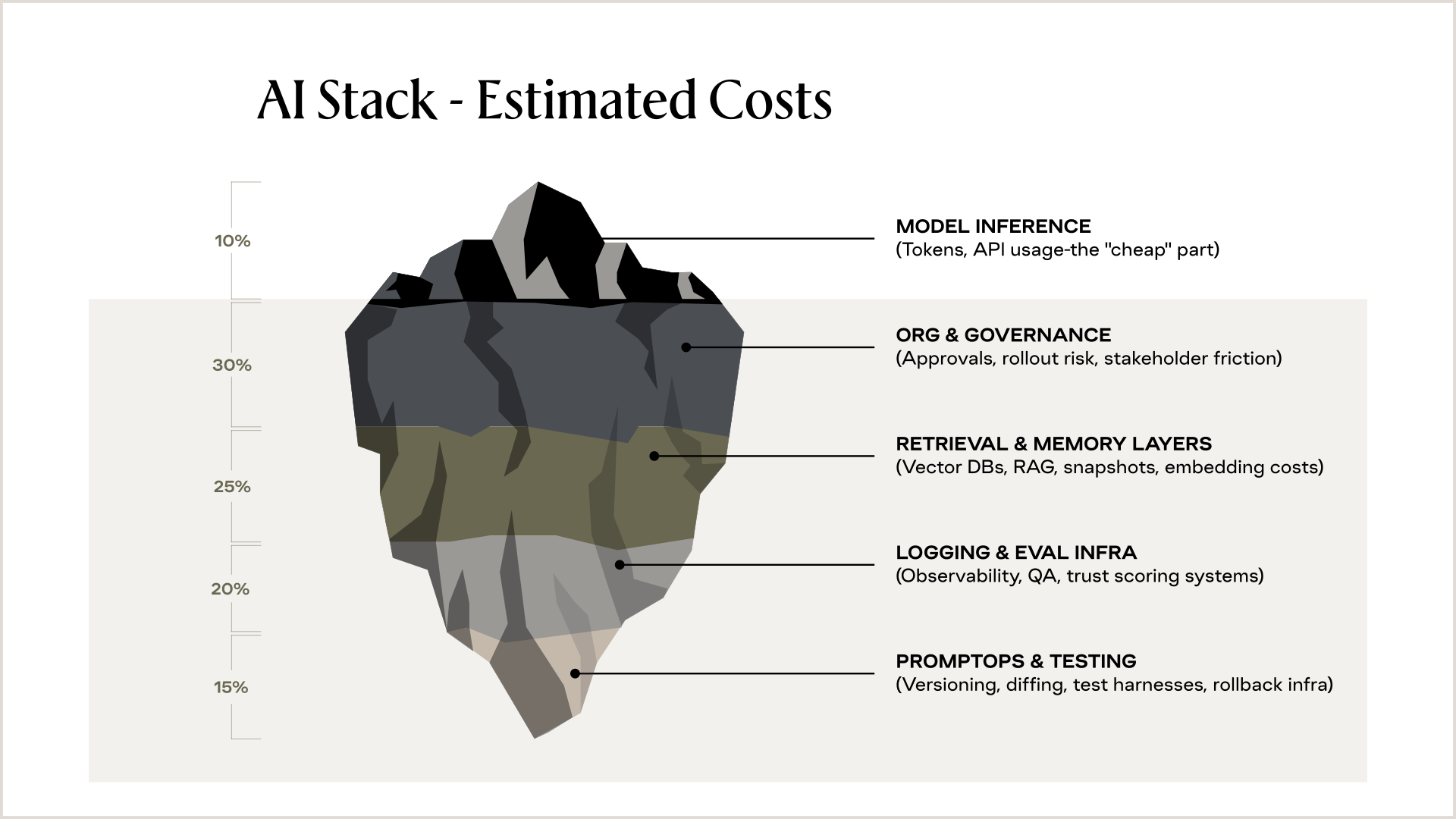
Inference cost is just the tip of the iceberg. Governance, retrieval, memory layers, logging, eval infra, prompt-ops, and testing, are significantly higher costs.
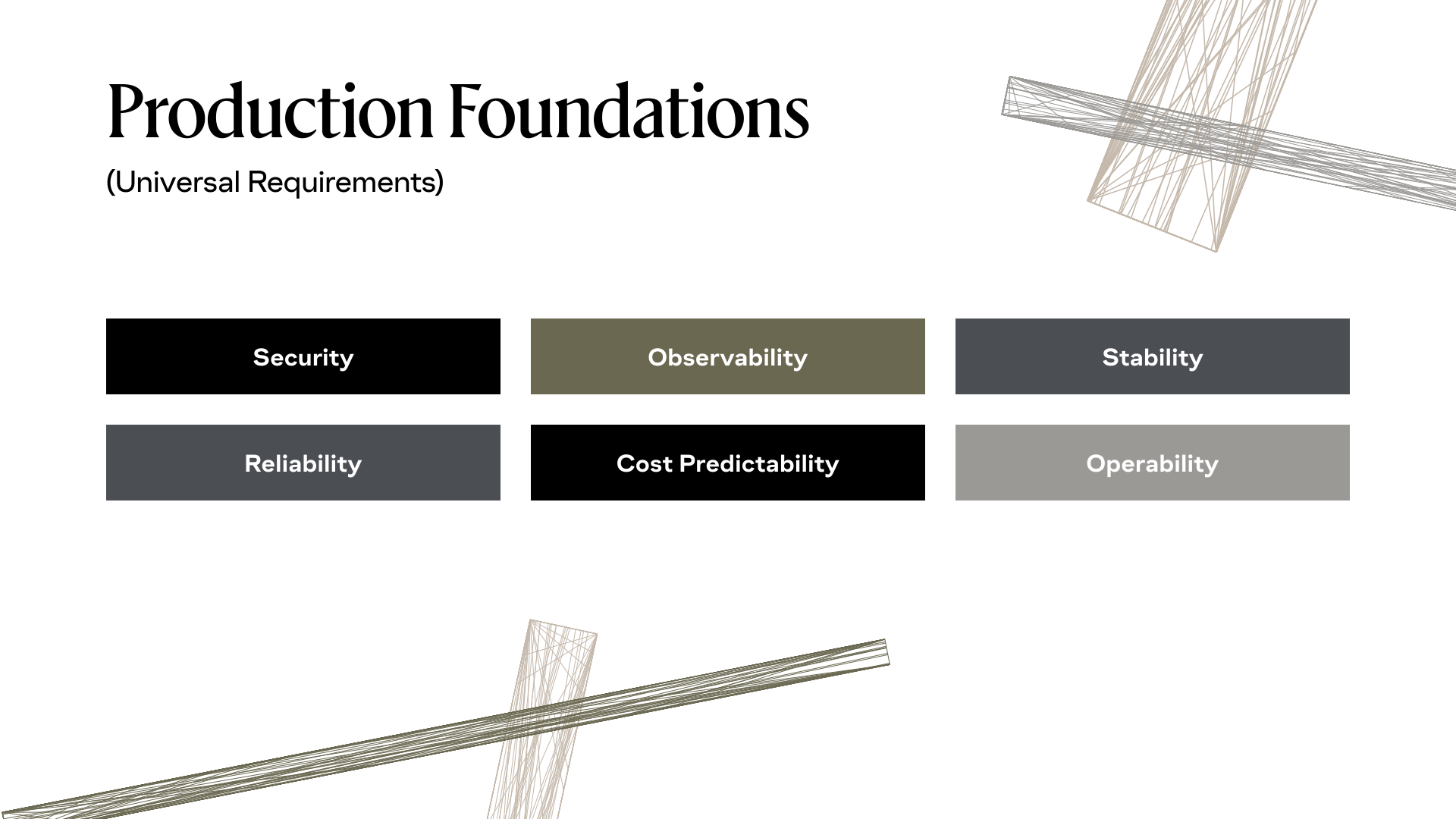
Six universal requirements for production grade software: Security, Observability, Stability, Reliability, Cost Predictability, and Operability - at scale.
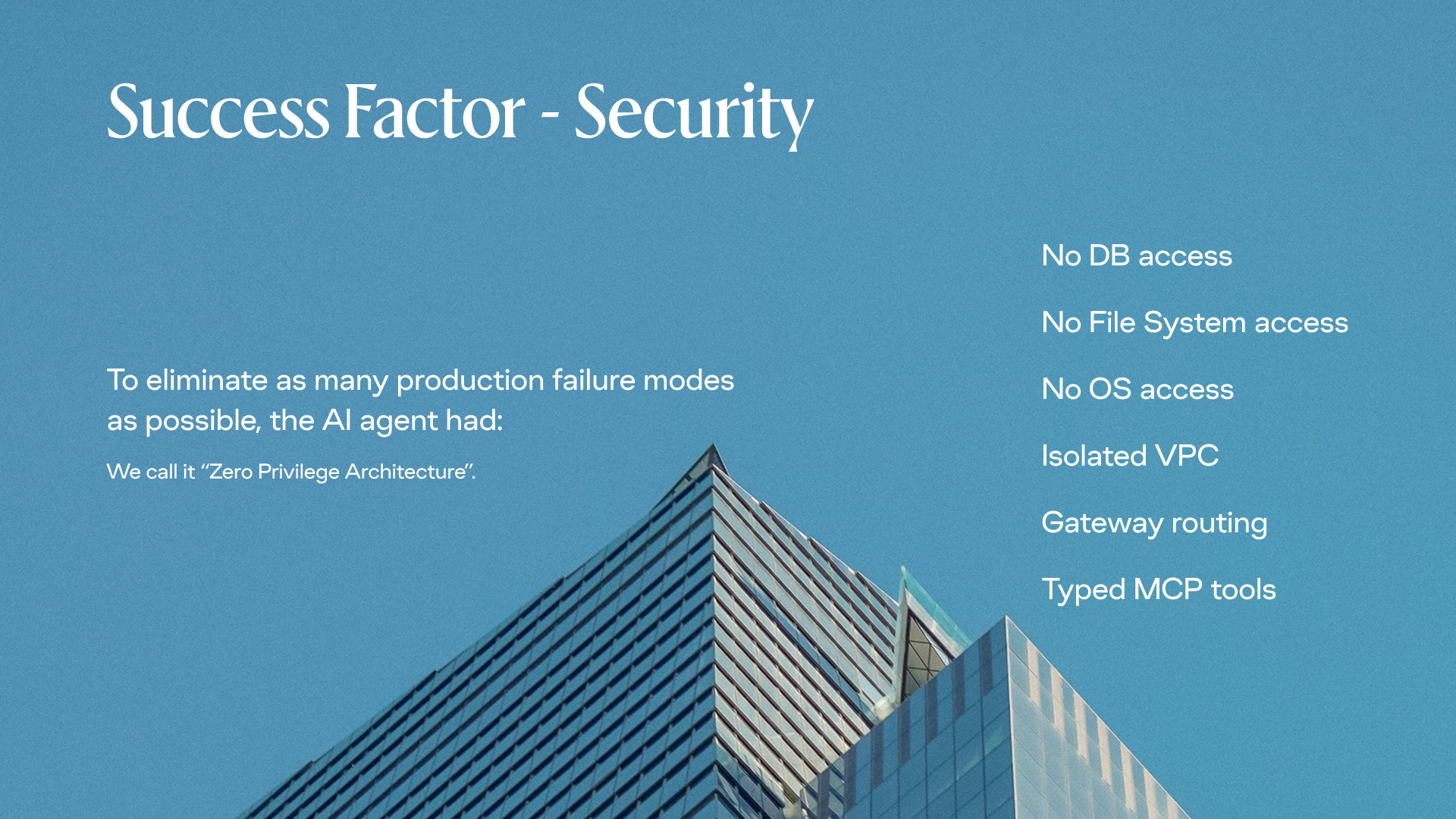
Security: Security Principle of Zero Privileges. New AI concerns requiring prompt-filtering Guardrails, manual review, and isolated component communication.
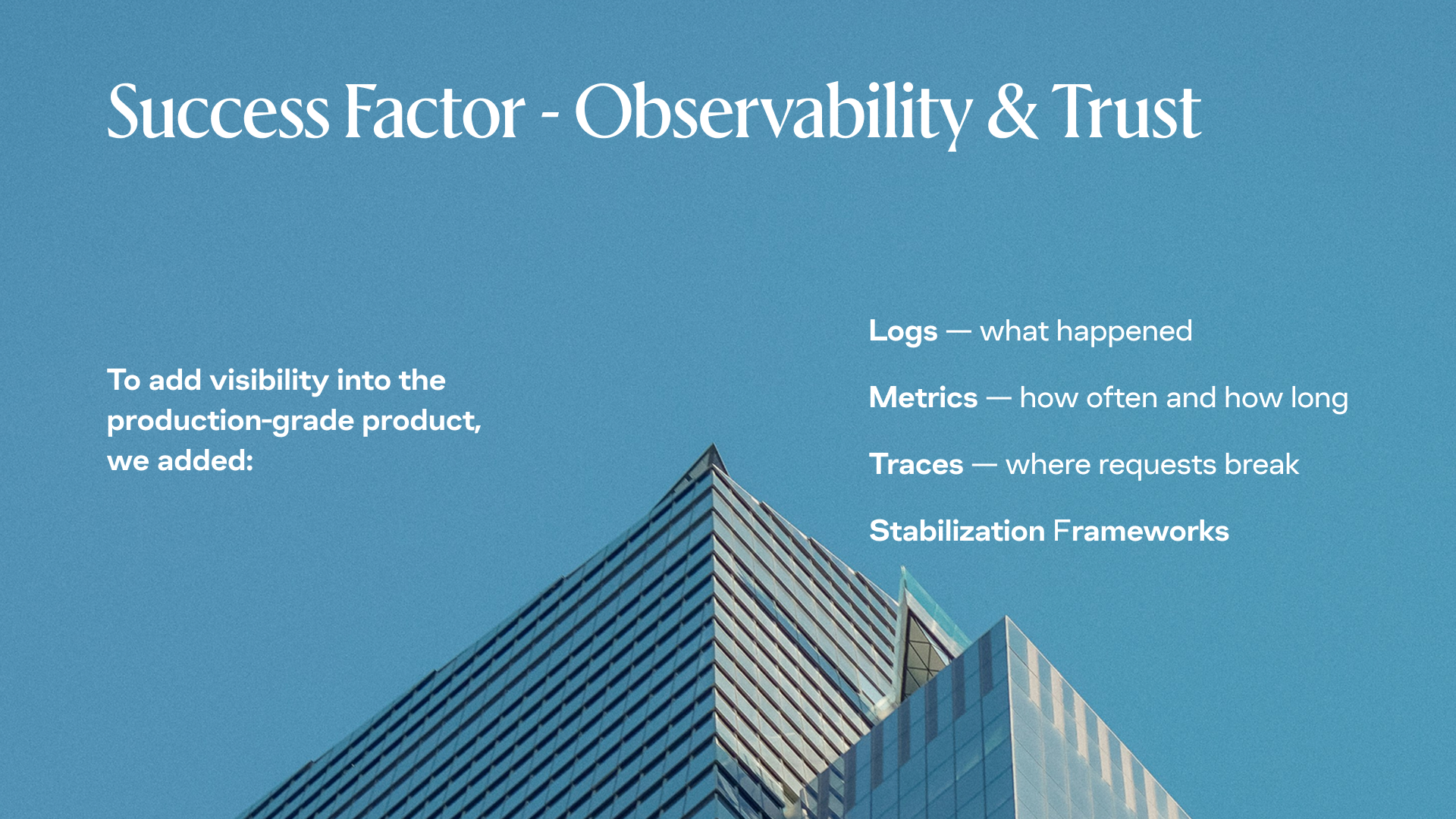
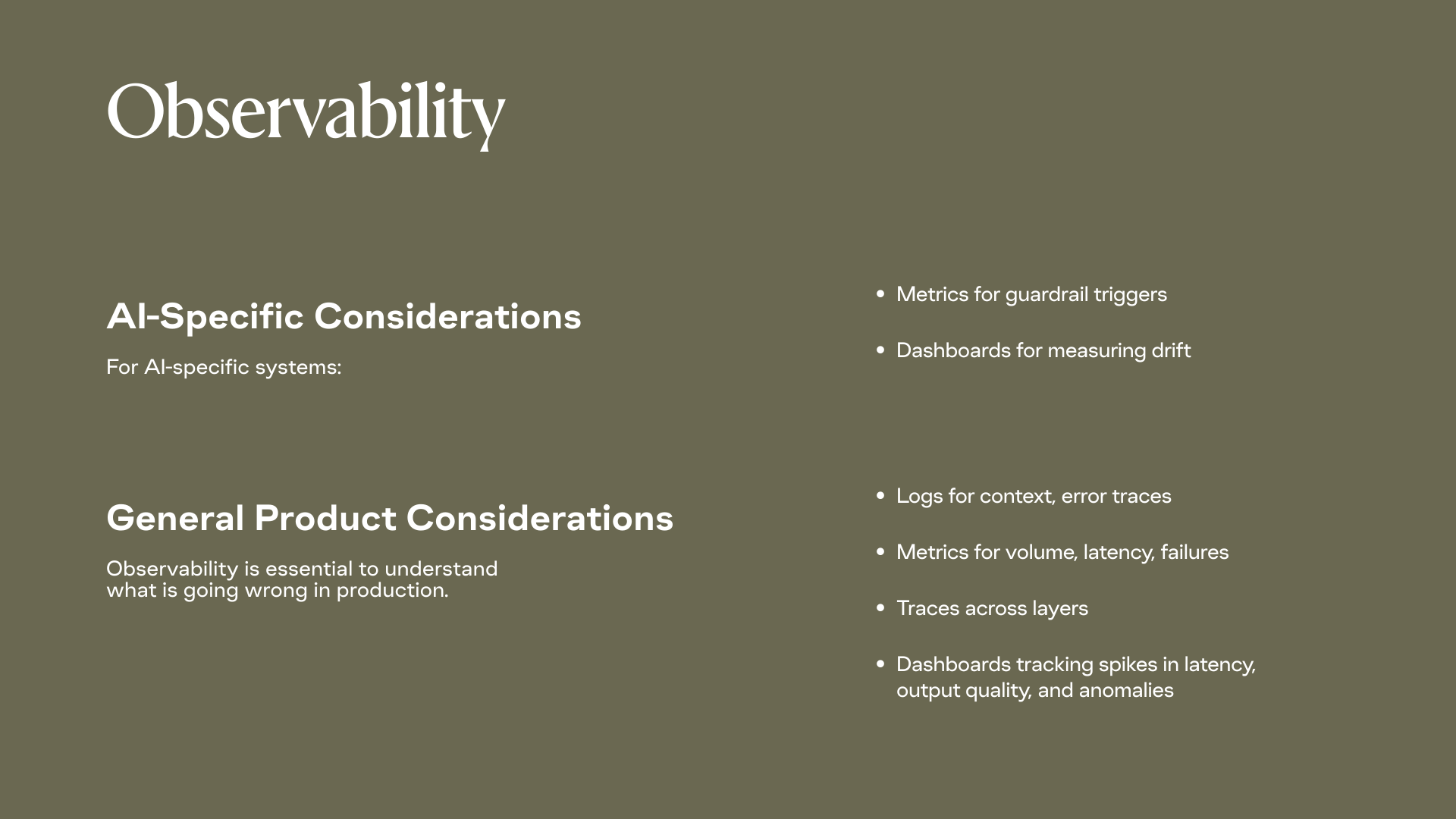
Observability: The ability to understand what your product is doing in the real world using the signals it produces. This is sometimes under-discussed, hard to get right, and often ignored. But when things fail in production, they usually fail at the worst possible time, costing customers and revenue.
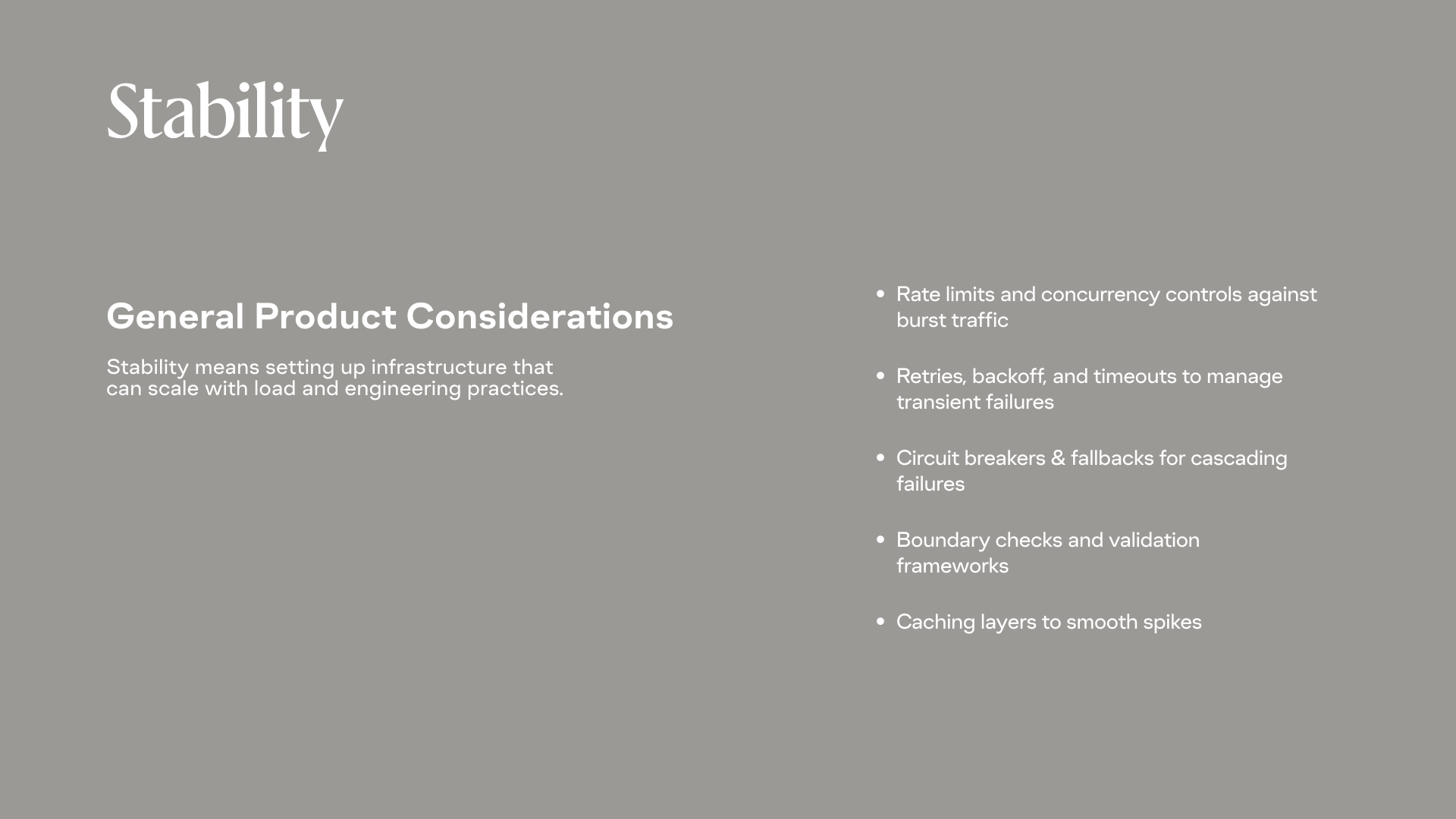
Stability metrics need to answer one question: How does the system handle stressed, degradation or partially fails?
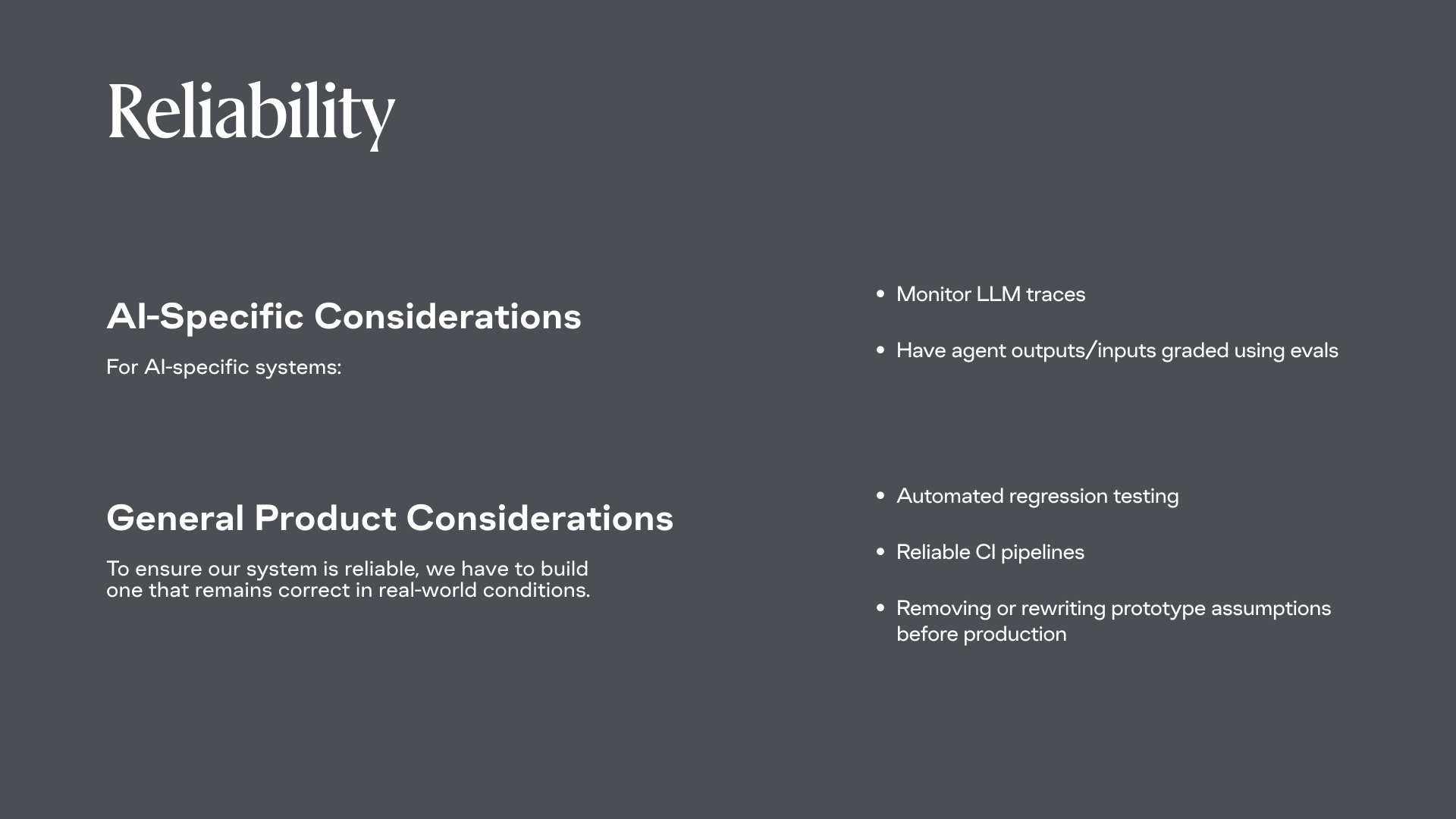
Reliability: Achieving reliability through comprehensive testing; an area where AI can provide significant leverage.
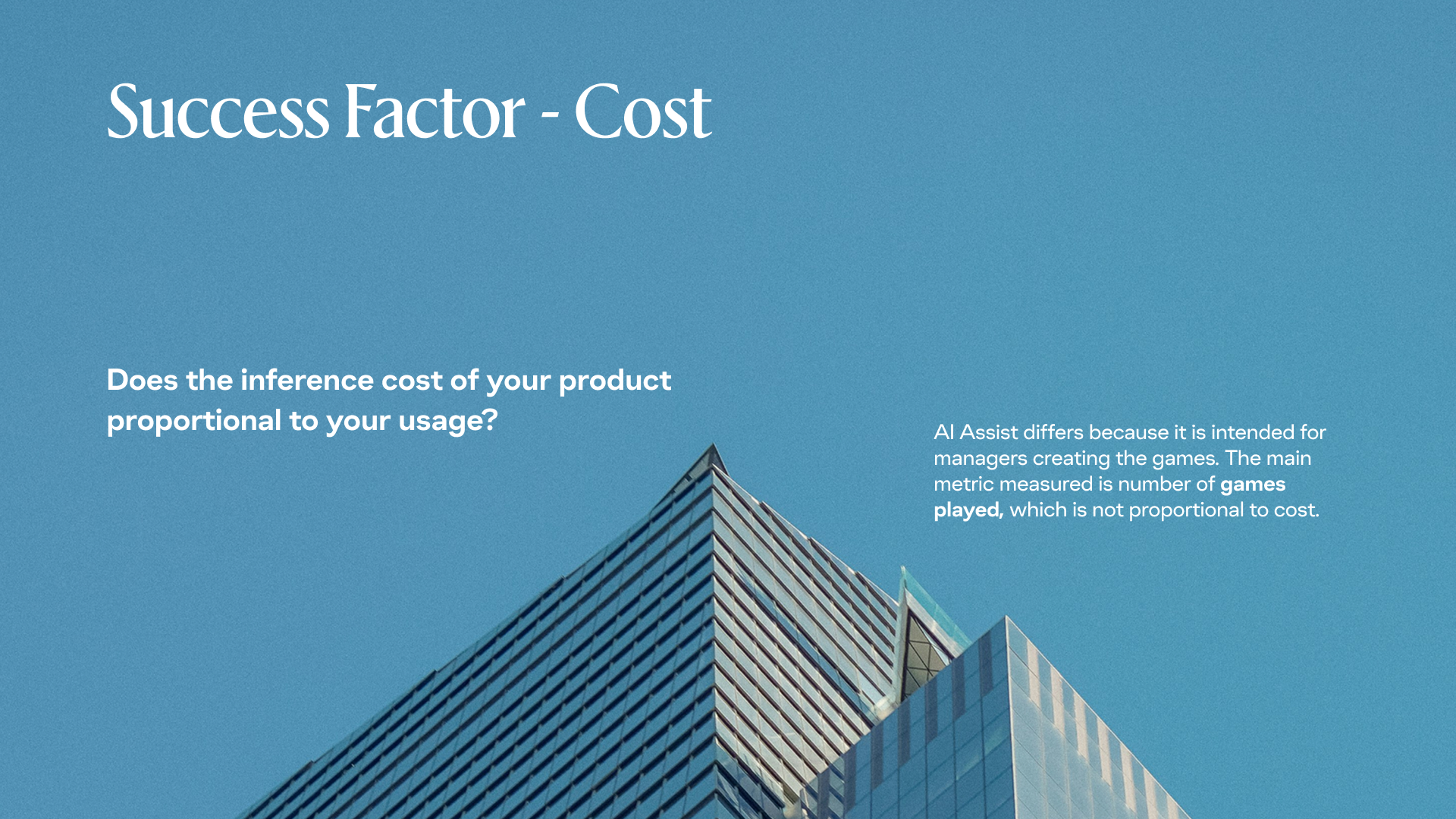
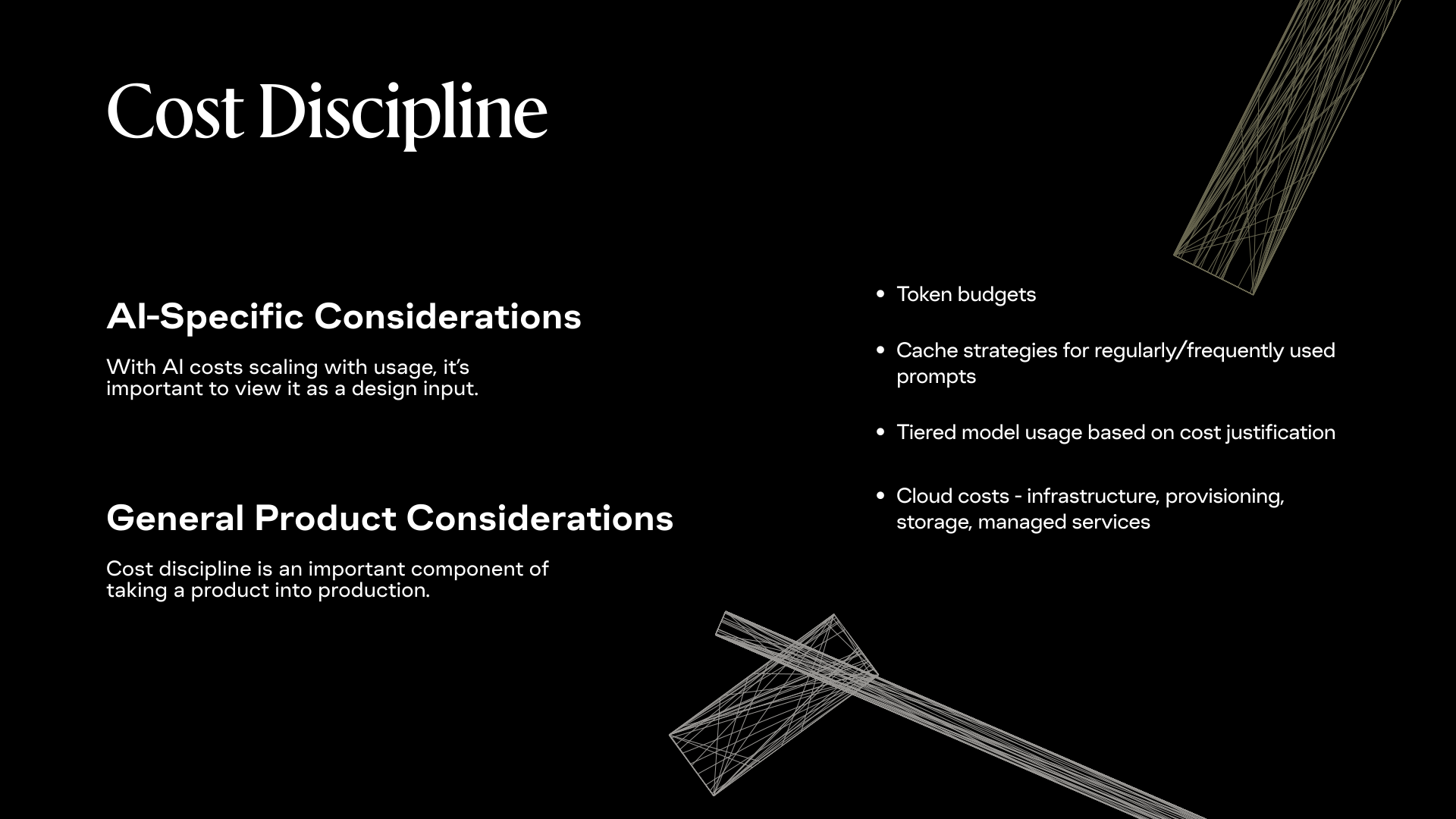
Cost Predictability: The necessity of an optimization mindset to manage high LLM inference costs and control the budget.
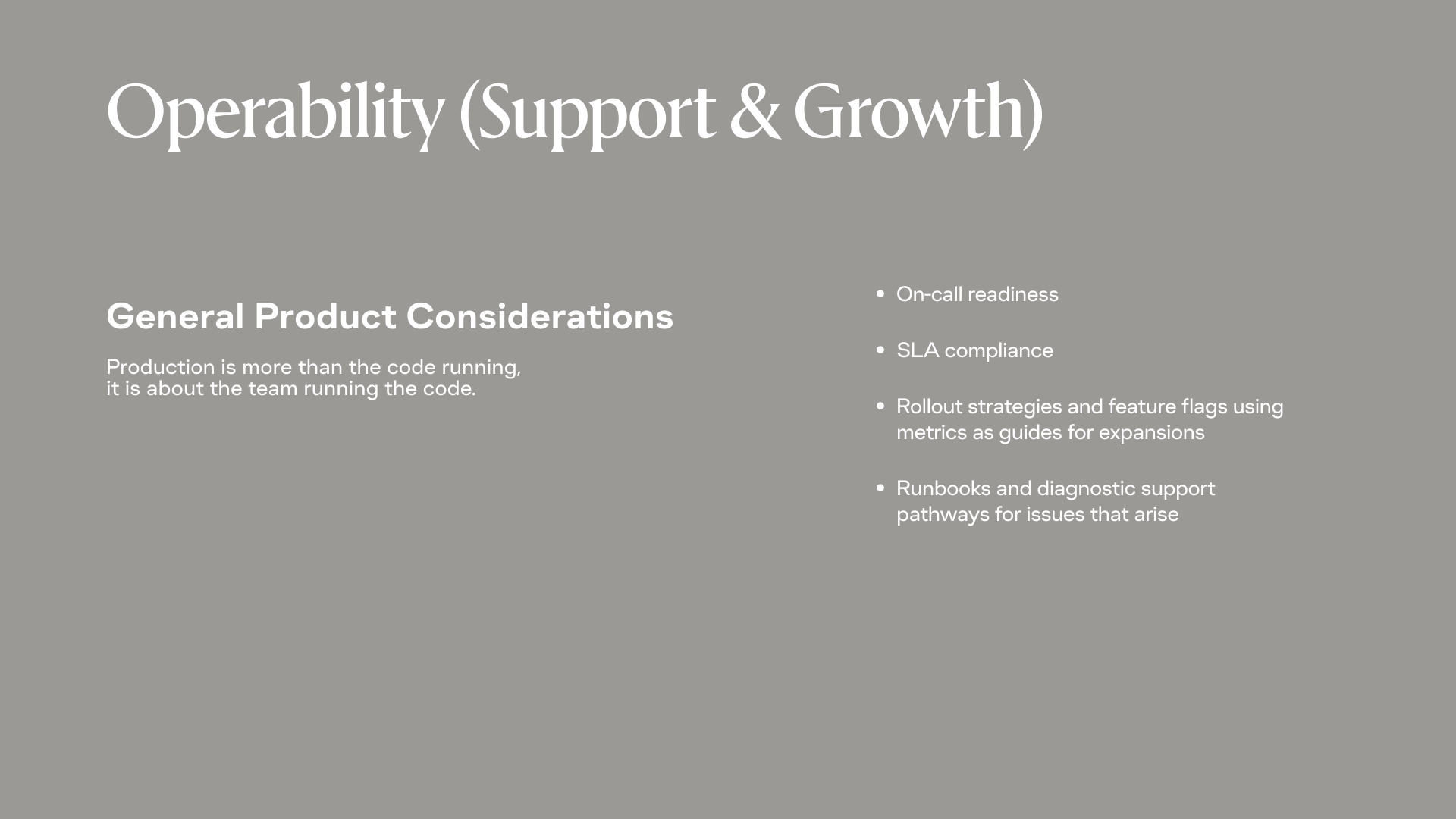
Operability: Build basic support, maintenance, and incident workflows early so running the system doesn’t descend into chaos and doesn’t rely on heroics.
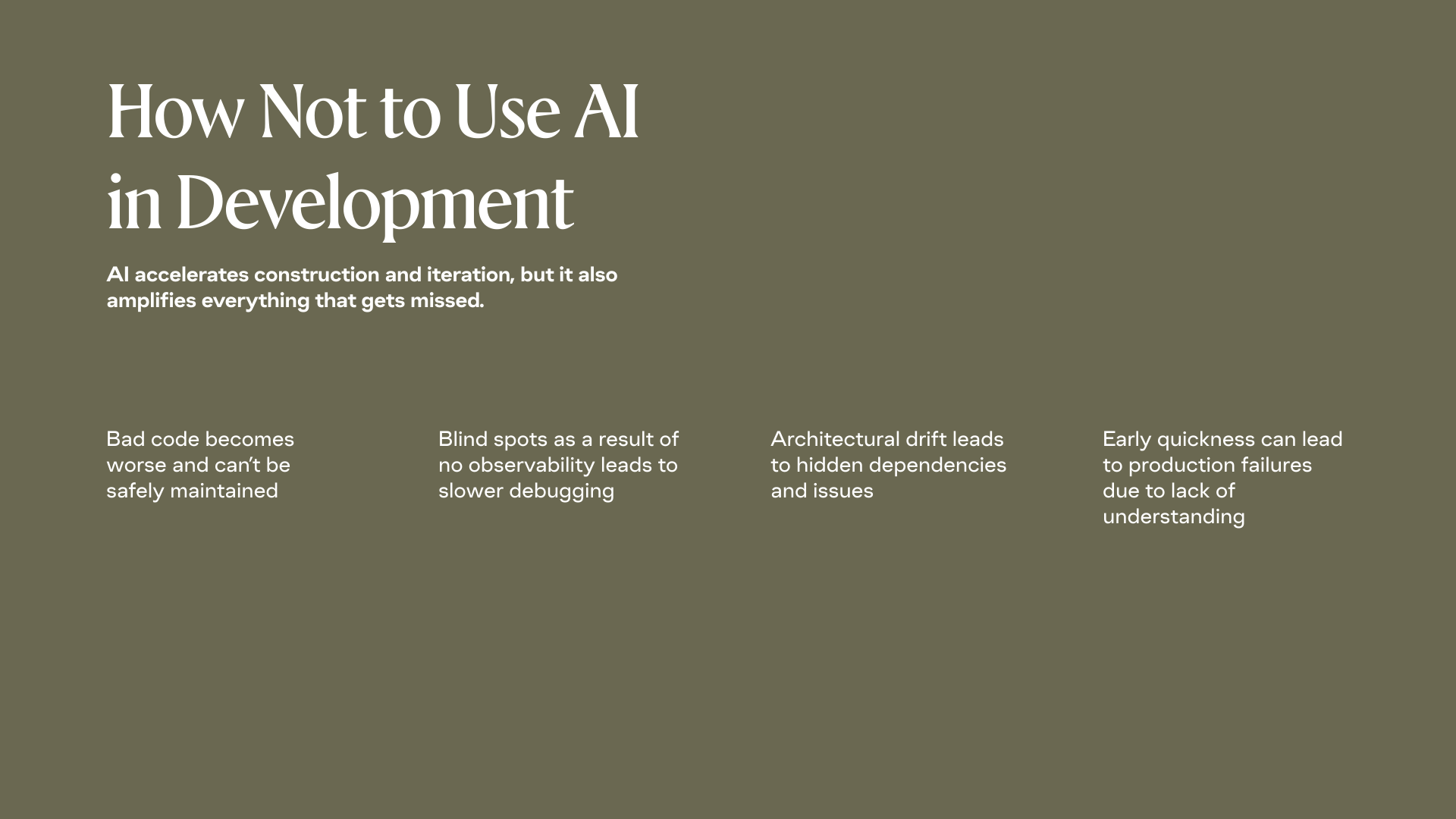
The AI Coding Dilemma: AI amplifies expertise, but also bad coding practices, making debugging harder and pushing the bottleneck to code review.
Best practices in AI assisted software development: 1. Human Ownership: The necessity of manual code review and human ownership; cannot allow AI to review AI. 2. Spec-Driven Development. 3. Small Controlled Steps.
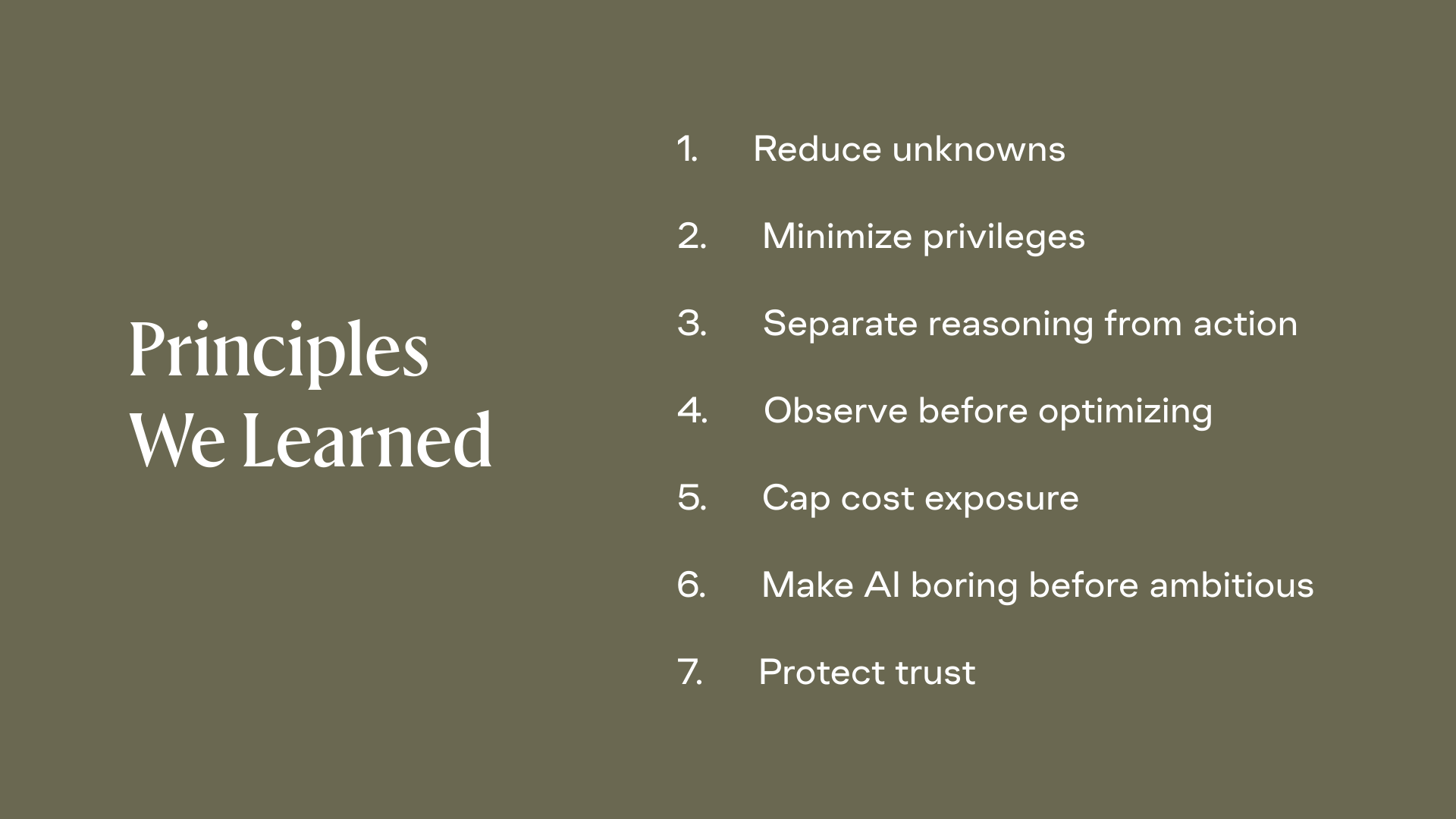
Seven Guiding Principles: Reduce unknowns, minimize privileges, separate reasoning from action, observe before optimizing, cap cost, and Make AI Boring Before Ambitious.
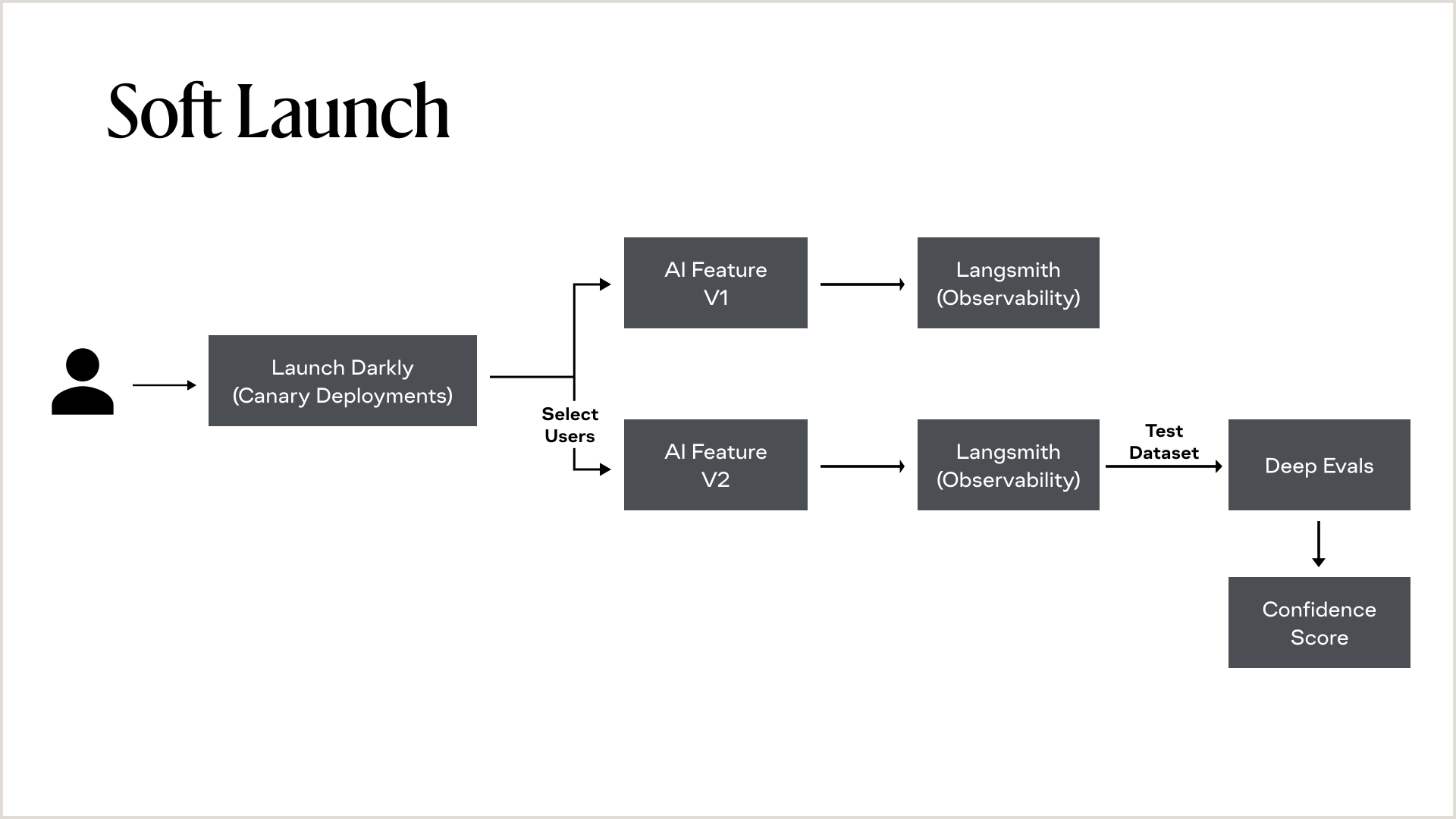
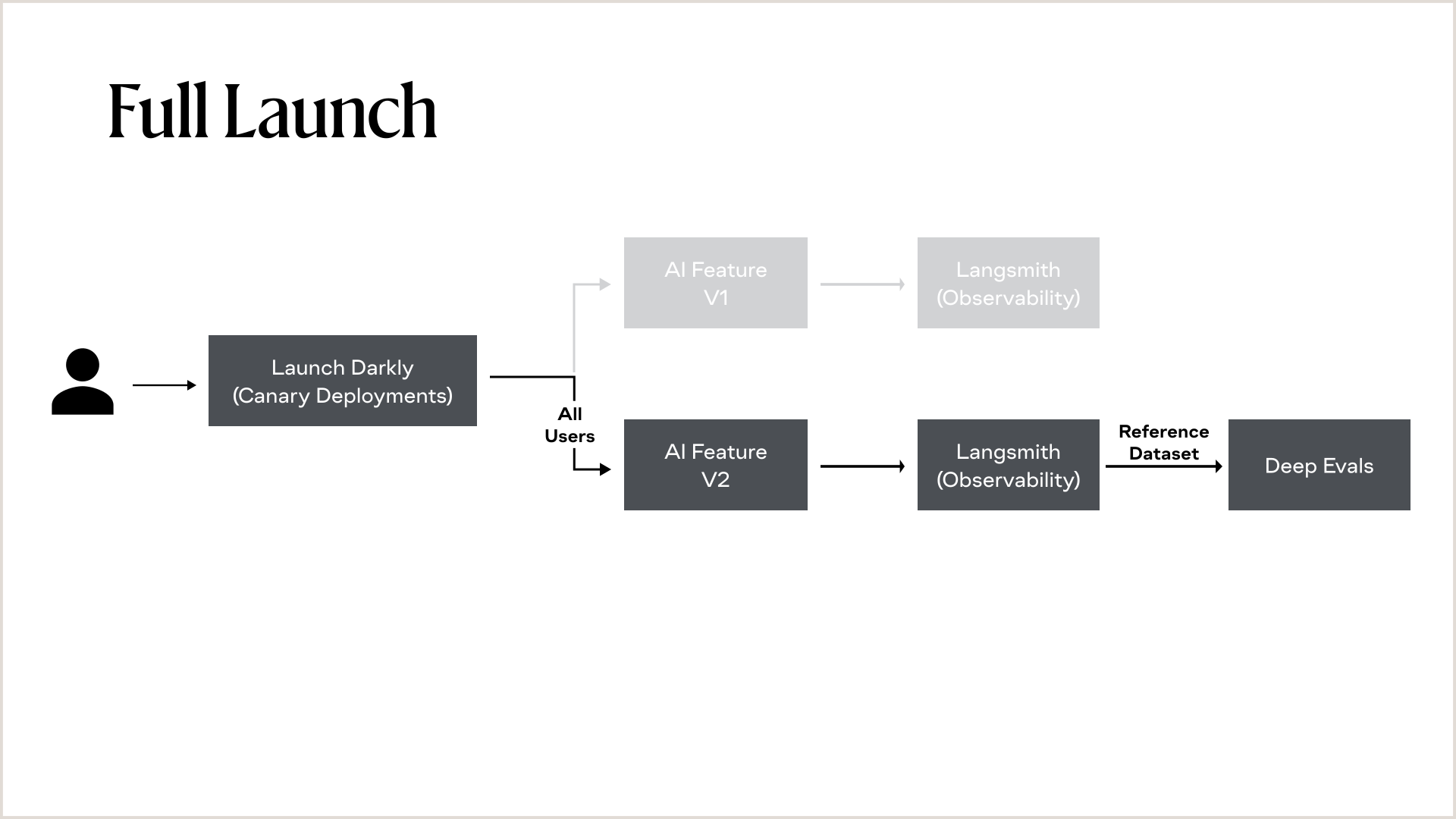
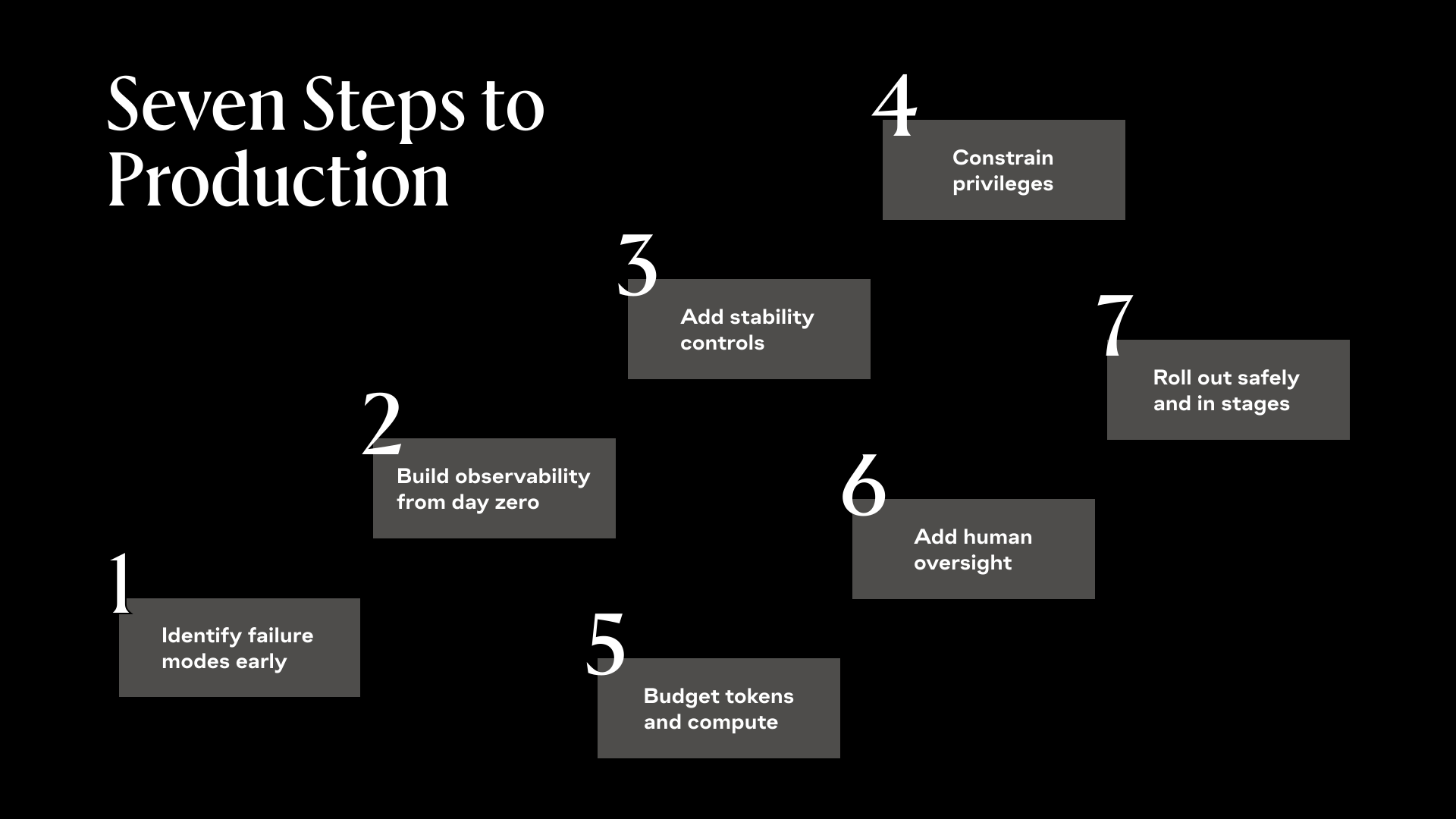
The important but often overlooked seven-step process.
What to Take Forward
AI tools are a game changer for product teams, but the hard part is turning it into something that works in the real world at scale, without addressing the fundamentals - product judgment, engineering strategy and operational readiness, weak foundations will be exposed.
At Codewalla, we work with teams to strengthen prototypes, so reach out if you want to sanity-check what you've built or to map a clear path to production.